
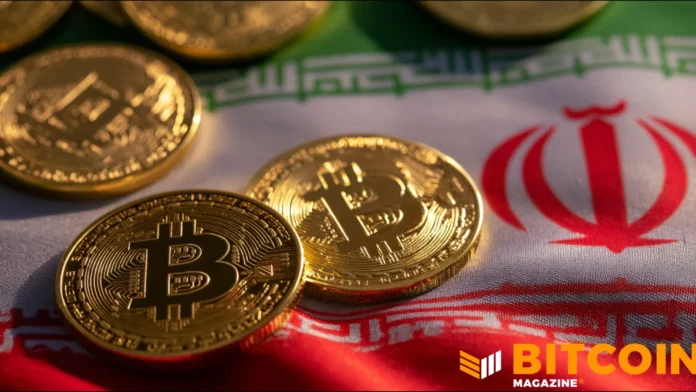

The U.S. government maintains its focus on curbing Iran’s utilization of bitcoin.
In an announcement on Thursday, the U.S. Department of the Treasury added Iranian cryptocurrency exchange BitBank to its sanctions list. This action falls under Operation Economic Outcast, which is the Trump administration’s comprehensive economic initiative directed at the Islamic Republic of Iran and those who support it.
Although the U.S. has enforced sanctions against Iran for decades, the Middle Eastern nation has increasingly turned to digital assets like bitcoin this year to bypass financial penalties.
“Today’s designations of Iranian digital asset infrastructure make perfectly clear that efforts to finance the Iranian regime using cryptocurrencies are not beyond OFAC’s reach,” Treasury Secretary Scott Bessent stated.
“If you support the Iranian regime, the Department of the Treasury will sanction you.”
The measures also penalize designated Iranian financier Babak Zanjani, his software development firm Pishtaz Simorgh Electronic Trade Company, and three associates connected to Zanjani: Hossein Ali Zaker Hossein, Mohammad Mahdi Zaker Hossein, and Seyed Adel Heidari.
According to the Treasury, the Iranian Hormuz Safe Marine Services Authority has utilized BitBank since June to transfer bitcoin to the Iranian government.
The Thursday actions seek to disrupt the “architecture Zanjani built to launder funds,” the agency noted.
“The Department of the Treasury will continue to not only target the Iranian digital asset ecosystem, but also international entities and actors which help facilitate it,” the statement added.
Earlier this year, Iran introduced a bitcoin-backed insurance program designed for shipping companies operating within its counties.
In July, the U.S. reported freezing cryptocurrency assets tied to the Iranian regime, primarily consisting of Tether’s stablecoin.
While stablecoins such as Tether’s USDT feature a central issuer capable of freezing funds, decentralized assets like bitcoin lack any single issuer and cannot be frozen in the same manner.
During July, the U.S. Treasury’s Office of Foreign Assets Control (OFAC) stated that Iran had been evading sanctions by accepting bitcoin payments from vessels traveling through the Strait of Hormuz.
At that time, OFAC reported that Hormuz Safe — a platform created by Iran’s Ministry of Economy — “accepts payment in Bitcoin and other digital assets” to circumvent economic restrictions.
Frequently Asked Questions
Why did the U.S. sanction BitBank?
The U.S. Treasury sanctioned the Iranian crypto exchange BitBank for transferring bitcoin to the Iranian regime and aiding in sanctions evasion.
Who is Babak Zanjani?
Babak Zanjani is a designated Iranian financier whose financial laundering architecture and associates were targeted by the recent U.S. Treasury sanctions.
What is Operation Economic Outcast?
It is the Trump administration’s comprehensive economic campaign targeting the Islamic Republic of Iran and its enablers.
How has Iran used cryptocurrencies to evade sanctions?
Iran has increasingly accepted bitcoin and other digital assets—such as through shipping insurance services and payments collected via Hormuz Safe for vessels passing through the Strait of Hormuz—to bypass economic penalties.