
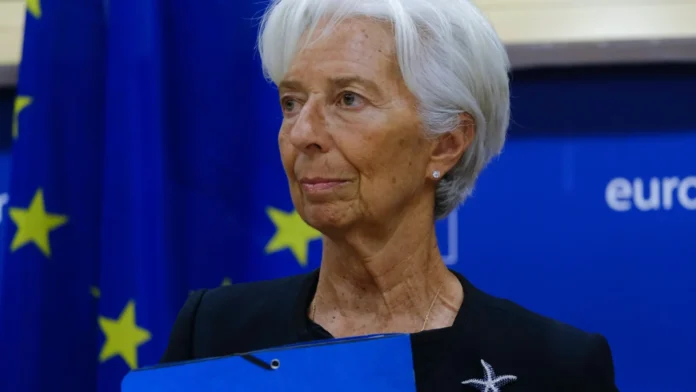

European Central Bank President Christine Lagarde intervened to prevent Binance from expanding its operations into the European Union, according to a recent report from the Wall Street Journal.
The Thursday publication detailed that the major cryptocurrency exchange was on the verge of securing approval to operate within the trading block before the central bank leader stepped in.
Under European Union regulations, local Crypto-Asset Service Providers (CASPs) must hold a Markets in Crypto-Assets (MiCA) license. Binance currently lacks this credential and notably withdrew its MiCA application in Greece this past June.
Drawing from interviews with various officials, the report stated that Lagarde aimed to bar the controversial crypto platform—which previously entered a guilty plea for U.S. financial-crime offenses—from entering the European market.
Lagarde has maintained a consistent stance against Bitcoin while favoring central bank digital currencies (CBDCs). In 2021, she characterized the leading cryptocurrency as a “highly speculative asset” linked to money laundering, dismissed the broader cryptocurrency sector, and asserted that central banks would never incorporate Bitcoin into their reserves.
Conversely, Lagarde supports CBDCs, which represent digital iterations of fiat currencies such as the euro or the U.S. dollar. Nations globally remain in varying phases of studying and developing these digital assets.
Under Lagarde’s leadership, the EU is advancing rapidly with the development of a digital euro. She has framed the digital euro as essential for Europe’s financial sovereignty while simultaneously criticizing privately issued stablecoins.
However, CBDCs face pushback from Bitcoin advocates and industry participants who warn they could facilitate government surveillance of citizens. Notably, U.S. President Donald Trump issued an executive order prohibiting CBDCs upon taking office.
Citing further interviews, the Journal noted that Lagarde’s apprehension stemmed from fears that Binance might solidify the stronghold of dollar-denominated stablecoins across Europe rather than fostering euro-based alternatives.
As the largest digital asset exchange globally, Binance handles billions of dollars in daily stablecoin trading volume.
Binance and its founder, Changpeng Zhao, faced legal scrutiny in 2023, pleading guilty to anti-money-laundering infractions and settling a record-breaking $4.3 billion penalty.
Despite these hurdles, Binance announced in June that it continues to pursue MiCA regulatory authorization through an alternative EU member state.
Frequently Asked Questions
Who blocked Binance from entering the European Union?
European Central Bank President Christine Lagarde blocked Binance from operating in the EU, according to a Wall Street Journal report.
What license is required for crypto exchanges to operate in the EU?
EU law mandates that local Crypto-Asset Service Providers (CASPs) must possess a MiCA license.
Why did Christine Lagarde oppose Binance’s entry?
Officials indicated Lagarde wanted to keep the exchange out due to its previous U.S. financial-crime guilty plea and concerns that it would strengthen the dominance of dollar-based stablecoins in Europe over euro counterparts.
What is Christine Lagarde’s stance on Bitcoin and CBDCs?
Lagarde has criticized Bitcoin as a speculative asset used for money laundering, but strongly supports central bank digital currencies like the digital euro for Europe’s financial autonomy.