
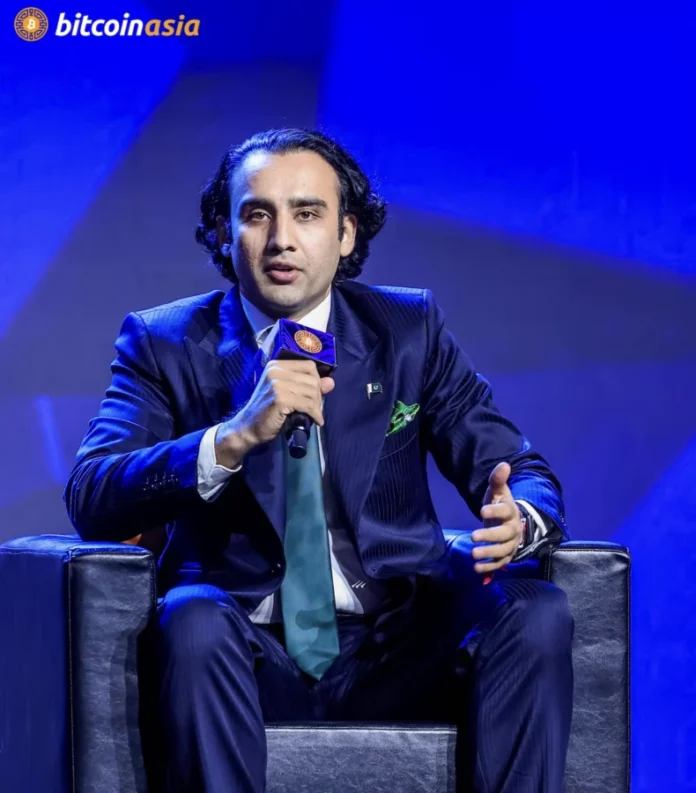

According to Bilal Bin Saqib, Pakistan’s Minister of State and Chairman of the Pakistan Virtual Assets Regulatory Authority (PVARA), the nation successfully established its virtual asset regulatory regime in under six months while utilizing a mere 8% of its allocated budget.
During his address at Bitcoin Asia in Hong Kong on August 28, Saqib revealed that roughly $200,000 was spent to build and operationalize the fresh regulatory framework, keeping approximately 92% of the approved funds untouched.
“We used only 8% of our approved budget to get this done,” Saqib stated. “Government should not measure success by how much money it spends. It should measure success by how much it delivers.”
In less than half a year, Pakistan transitioned from primary legislation to notified regulations alongside a live licensing framework, creating a clear pathway for digital asset businesses.
The established rules encompass various activities including custody, exchanges, brokerage, lending, asset management, and settlement. They also mandate strict compliance regarding governance, counter-terrorism financing, anti-money laundering, cybersecurity, customer asset safeguarding, and market conduct.
This rollout marks a major step for Pakistan in integrating Bitcoin and digital assets into the formal financial sector, offering companies a concrete operational framework within the nation.
Rethinking How Governments Build
Saqib highlighted the PVARA launch as more than just a regulatory milestone, pointing out that it illustrates a fresh model for government operations amid rapid technological advancements.
Rather than expanding bureaucracy, the authority relied on lean teams, tech-driven workflows, and a strong focus on execution.
“Technology is moving at machine speed. Government has to learn how to move much faster without compromising structure, accountability or consumer protection,” Saqib noted.
Furthermore, he emphasized the importance of maintaining institutional credibility alongside speed as new technologies emerge.
“Speed without structure can be dangerous. But structure without speed can become irrelevant.”
This philosophy underscores Pakistan’s broader financial technology aspirations. Instead of merely consuming foreign innovations, the country aims to actively shape upcoming financial infrastructure.
Beyond Crypto: The Agentic Economy
Beyond today’s digital asset market, Pakistan’s regulatory ambitions look toward the future, according to Saqib.
The nation is preparing for an economy driven by tokenized markets, stablecoins, programmable payments, artificial intelligence agents, and machine-to-machine commerce.
As AI agents begin executing transactions on behalf of companies, individuals, and other machines, governments will face novel challenges concerning financial authority, compliance, identity, and consumer protection.
Key questions for authorities include accountability when an AI agent handles a transaction, the proper framework for delegated authority, and how anti-money laundering protocols apply to direct machine-to-machine commerce.
“Today we are regulating virtual asset service providers,” Saqib said. “Tomorrow we will need regulation around agentic payments and the agentic economy.”
He views the current virtual asset framework as a foundational stepping stone for this broader future economy.
Pakistan Wants to Build at the Frontier
This strategy seeks to break the conventional timeline where emerging markets typically adopt innovations only after they mature in larger economies.
“Emerging markets do not have to spend the next decade catching up. We can build at the frontier,” Saqib remarked.
Housing a population exceeding 240 million, Pakistan serves as a highly promising market for emerging financial technology.
For PVARA, the immediate trial will involve drawing legitimate digital asset enterprises while upholding consumer safeguards and oversight.
However, Saqib’s vision reaches far beyond basic regulation.
Achieving a swift transition from legislation to live licensing on just 8% of its budget serves as a blueprint for how state entities can handle upcoming generations of financial infrastructure.
Ultimately, the country plans to apply this agile mindset to an evolving economy where artificial intelligence, programmable finance, and digital assets converge.
You can watch Saqib’s full appearance at Bitcoin Asia 2026 below.
Frequently Asked Questions
How much of its budget did Pakistan use to build its crypto regulatory regime?
Pakistan used just 8% of its approved budget, amounting to approximately $200,000, leaving about 92% unspent.
Who announced Pakistan’s virtual asset framework and where?
The announcement was made by Bilal Bin Saqib, Minister of State and Chairman of the Pakistan Virtual Assets Regulatory Authority (PVARA), at Bitcoin Asia in Hong Kong on August 28.
How long did it take Pakistan to launch its virtual asset regime?
Pakistan moved from primary legislation to notified regulations and a live licensing regime in under six months.
What areas does Pakistan’s new regulatory framework cover?
The framework covers exchanges, custody, brokerage, asset management, lending, and settlement, alongside rules for governance, AML/CFT, customer asset protection, cybersecurity, and market conduct.