
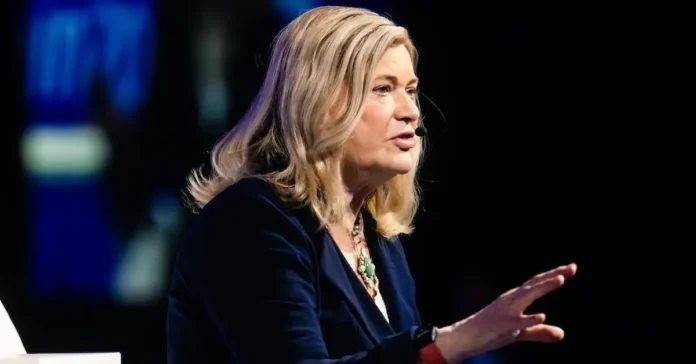

Republican Senator Cynthia Lummis has commended U.S. President Donald Trump for accepting “the toughest ethics restrictions” in a bid to secure passage for the Clarity Act.
Writing on X on Monday, the pro-crypto lawmaker stated that Trump agreed to stricter regulations that grant state attorneys general the standing to sue in order to enforce conflict-of-interest mandates on federal officials.
Legislators are scheduled to vote on the Clarity Act tomorrow. The legislation seeks to officially separate regulatory oversight by clarifying which digital assets qualify as commodities, securities, or stablecoins—a regulatory framework that figures in the cryptocurrency sector have advocated for extensively.
JUST IN:
Senator Lummis on the Clarity Act: "President Trump had already agreed to the toughest ethics restrictions on federal officials in American history to get this bill done."
"Time for Democrats to take yes for an answer." pic.twitter.com/3VLn6y4fph
— Bitcoin Magazine (@BitcoinMagazine) September 14, 2026
“Back in July, Trump voluntarily put himself, the VP, every federally elected official, judges, and their spouses under the strictest ethics rules this country has ever seen. Most people in Washington never would’ve offered that. Democrats still wanted independent, outside enforcement, not DOJ alone — so Trump went back to the table and gave more,” Lummis remarked.
She further noted: “A no vote tomorrow kills the toughest ethics reform this country has ever put on the books, kills consumer protections for every American holding digital assets, and hands the future of this industry to our foreign competitors.”
Collaborating with senators John Boozman and Tim Scott, Lummis published a revised draft of the Clarity Act on Sunday evening that equips enforcement attorneys with new authorities.
An earlier updated draft that prohibited government officials from generating income from or promoting cryptocurrency began circulating in July, though Democrats pushed for further revisions.
While President Donald Trump ran his campaign on a platform supporting the cryptocurrency sector, certain Washington lawmakers have raised concerns regarding profits generated by the Trump family from digital asset initiatives, including the President’s $TRUMP memecoin and the World Liberty Financial venture.
Both the White House and Trump have consistently rejected allegations of any conflicts of interest.
During an August interview with Punchbowl News addressing the Clarity Act and ethics, President Trump emphasized that Democrats have also generated profits through stock trading activities.
Despite clearing the House of Representatives in the previous year, advancement of the Clarity Act has stalled throughout the current year, primarily due to disagreements between the banking lobby and cryptocurrency firms regarding the distribution of stablecoin yields to customers.
GOP lawmakers, including Lummis, have asserted that Democrats are intentionally delaying the legislation.
Frequently Asked Questions
What is the Clarity Act?
The Clarity Act is a legislative bill designed to divide oversight between regulators and formally distinguish whether digital assets are securities, commodities, or stablecoins.
When is the vote for the Clarity Act?
Lawmakers are scheduled to vote on the Clarity Act on Tuesday.
What ethics restrictions did President Trump agree to?
President Trump agreed to ethics rules that place himself, the vice president, federally elected officials, judges, and their spouses under strict regulations, including provisions that give state attorneys general the standing to sue to enforce conflict-of-interest rules.
Who introduced the new draft of the Clarity Act?
Senators Cynthia Lummis, John Boozman, and Tim Scott released a new draft of the Clarity Act on Sunday night.