
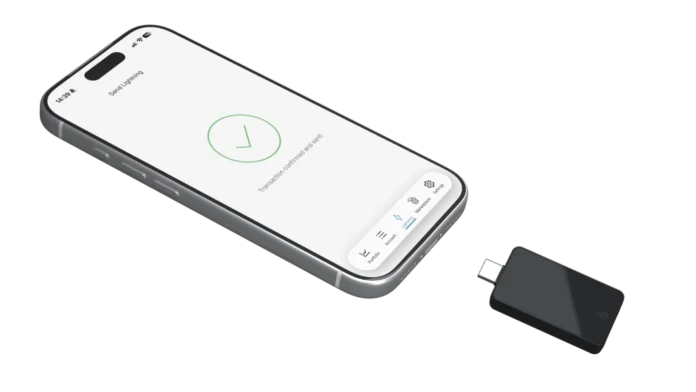

Bitcoin wallet maker BitBox is bringing the Lightning Network directly to mobile users.
As announced on Tuesday, owners of any BitBox hardware wallet can now set up a Lightning hot wallet directly within the mobile BitBoxApp. This allows them to fund the wallet straight from their on-chain balance and pay invoices seamlessly, eliminating the need to switch between different apps, wallets, or third-party platforms.
Furthermore, users are not required to generate a new recovery phrase. Because the Lightning wallet is derived from the existing BitBox backup, no additional words need to be recorded, while both wallets remain separate.
Instant bitcoin on a hardware wallet
Savings on the BitBox, spending on your phone, one backup for both wallets. Powered by Breez.
Congrats @BitBoxSwiss
https://t.co/vM3JE0WNEC
— Breez
(@Breez_Tech) September 15, 2026


Designed for daily purchases like coffee, invoices, and rapid transfers, the Lightning component functions as a hot wallet for minor sums, whereas long-term savings remain securely stored on the hardware device.
Within the BitBoxApp, individuals have the ability to scan and settle Lightning invoices, send and receive bitcoin, claim a personal Lightning address, fund the wallet from their on-chain balance, and transfer funds back.
The integration is powered by the Breez SDK, making BitBox one of more than 100 partners to adopt the technology. Spark manages the backend mechanics that historically discouraged everyday users from utilizing Lightning, meaning there are no nodes to operate, channels to configure, or liquidity to manage. Throughout the process, the user maintains self-custody.
In August, Breez released Glow, a tool designed to let developers inspect the backend operations of the Lightning wallet and create their own custom applications.
Frequently Asked Questions
Do I need a new seed phrase for the BitBox Lightning wallet?
No, the Lightning wallet derives from your existing BitBox backup without requiring extra words to be written down.
Can I fund the Lightning wallet from my on-chain balance?
Yes, users can fund the hot wallet directly from their on-chain balance and return funds back to it.
Do I need to manage channels or run a node?
No, the feature is powered by the Breez SDK, meaning there are no nodes to operate, channels to configure, or liquidity to monitor.
Who maintains custody of the funds?
The user retains full self-custody of their funds at all times.