

Bitcoin is frequently discussed using abstract terminology such as “cryptocurrency” and “digital gold“—metaphors designed to make this digital monetary system feel more physical and tangible to everyday people. While the effectiveness of these metaphors is often debated, they are far from the only attempts to make Bitcoin appear as more than just another technical asset in a portfolio.
Over the years, a growing niche of Bitcoin visualizers, explorers, and passive, art-first interfaces has developed. These tools make the cryptocurrency feel alive, creating items you can display on your wall, admire casually, or even listen to like birds chirping outside a window. In some instances, Bitcoiners link them to physical devices for interactive experiences that can serve as a conversation starter when guests visit.
Here are the top Bitcoin visualizers, ranging from price feeds to node data and mempools, designed to decorate your home or even inspire you to vibe code your own.
The Block Explorer
First things first: the block explorer. As perhaps the most iconic window into the Bitcoin world, block explorers have existed since the early days of the industry. They act as a public notary for on-chain transactions, allowing users to send a bitcoin payment, paste the transaction ID or destination address into a website, and receive a cryptographically authenticated, timestamped receipt that is easily shared with recipients. Today, most wallets integrate a block explorer into their transaction data so users can verify payments from separate applications or websites.
Mempool.space
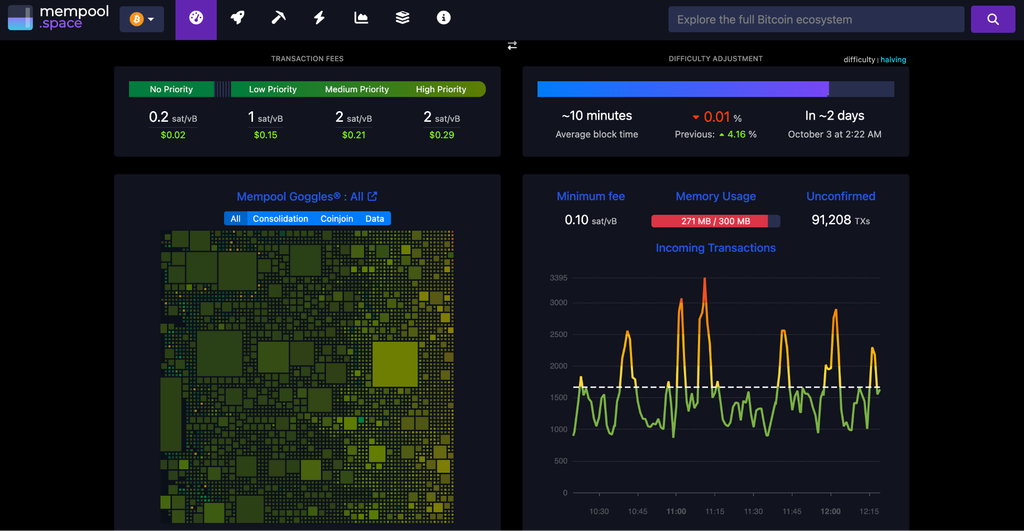
The earliest major block explorer was likely Blockchain.info, which initially functioned as a web wallet before expanding into numerous other areas of the broader crypto industry. Within the Bitcoin-only market, Mempool.space stands out as one of the most visited websites in its niche, offering a clear and visually appealing view of the Bitcoin economy.
Aside from supplying basic transaction data—such as whether a payment is confirmed on-chain—the site estimates the fee market to prevent users from overpaying for on-chain transactions and displays the transaction types expected in the next mined block. Mempool.space features an open-source back end that users can run locally on their own machines as a layer atop a home full node, serving as a customized interface for viewing the network through their own mempool perspective.
ExploreTimeChain.com
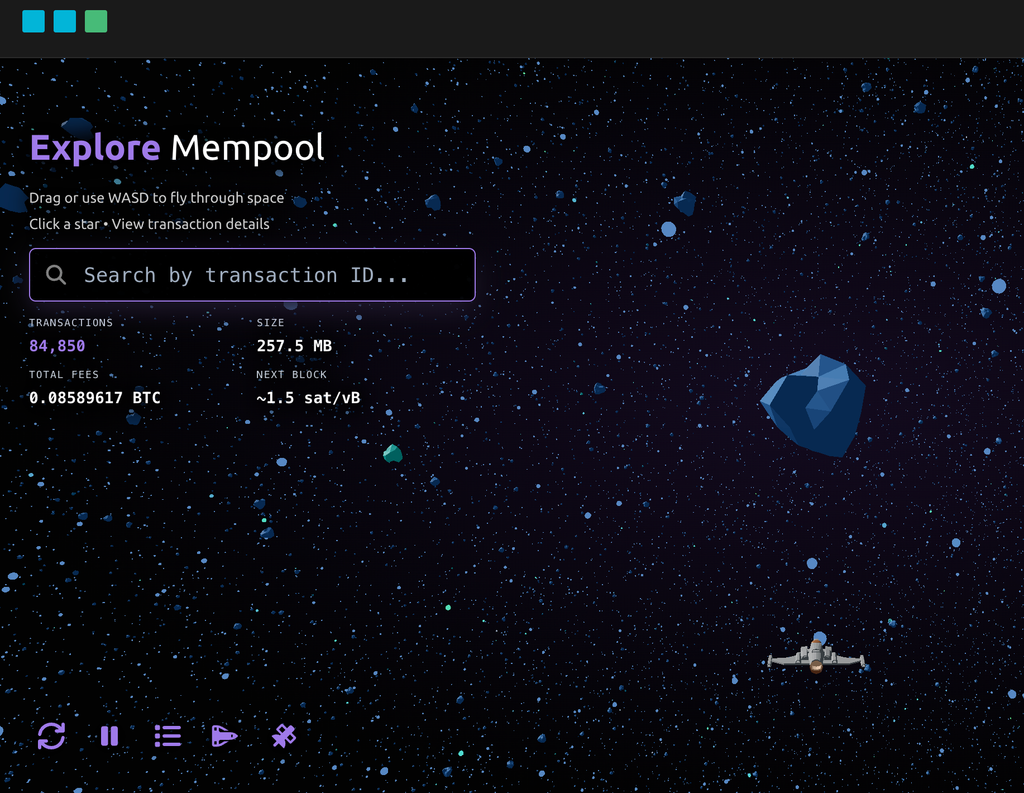
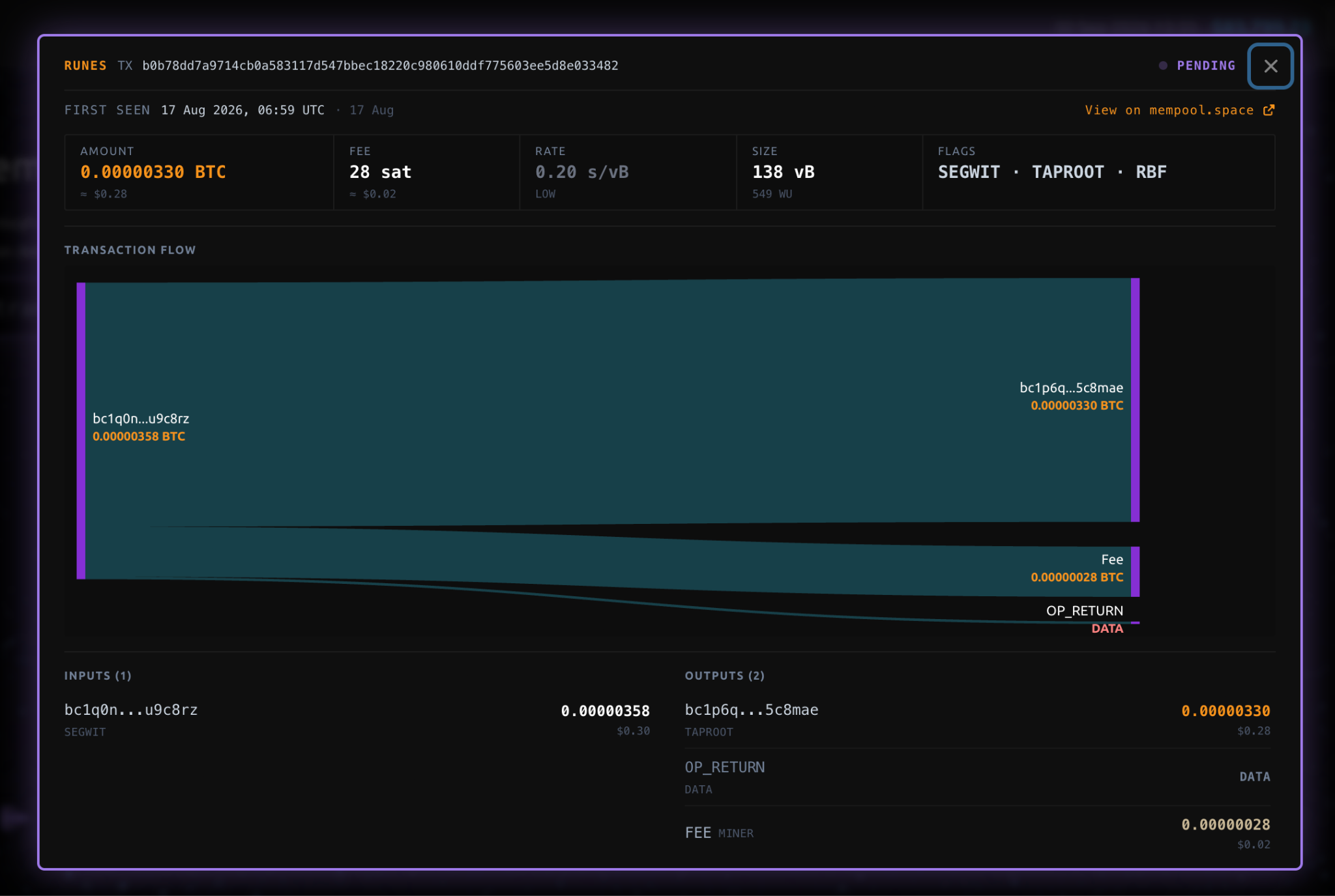
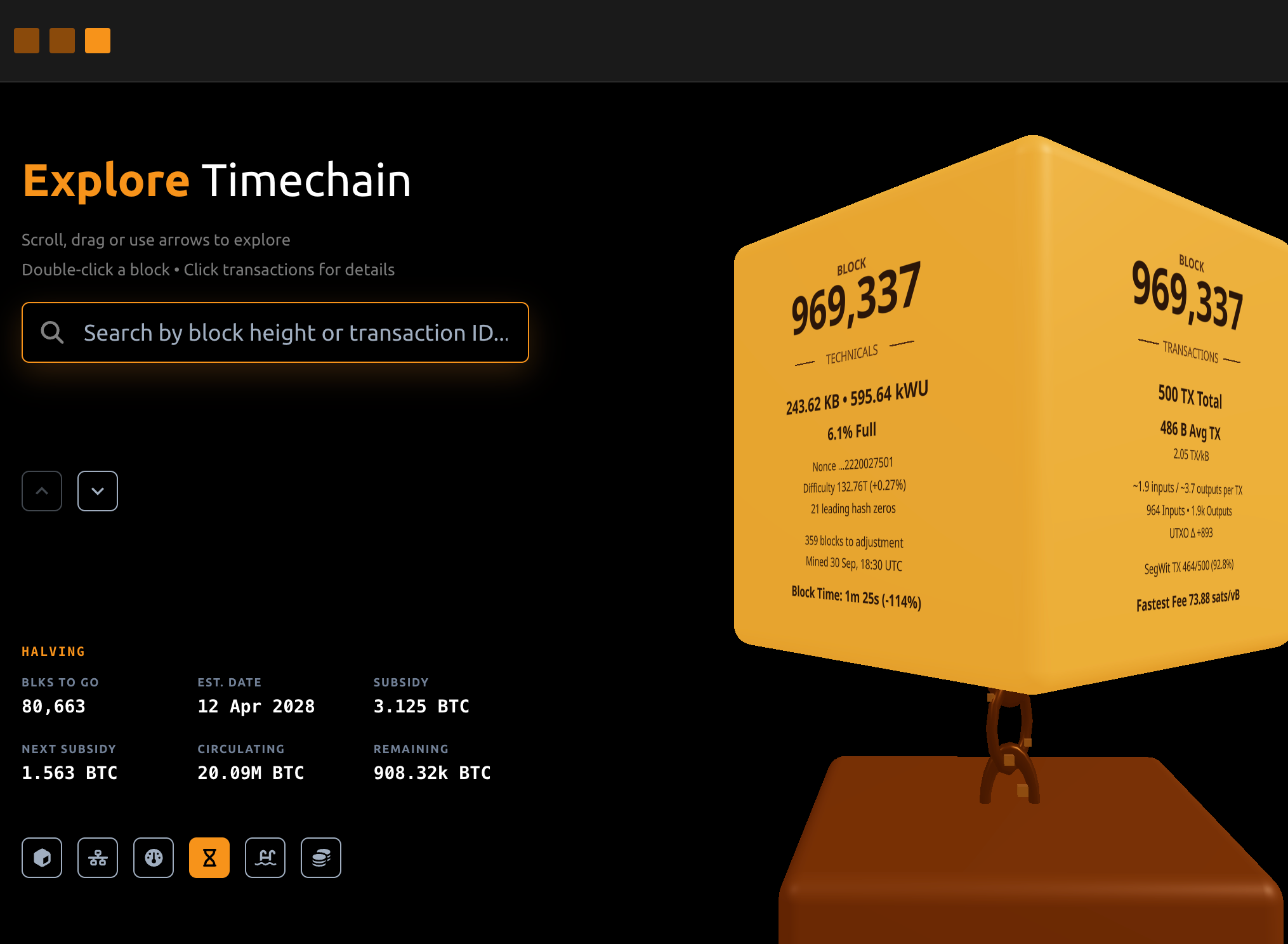
Eager to reach the moon, ExploreTimeChain.com provides a full space-exploration interface applied to the time chain—Satoshi Nakamoto’s original term for the blockchain found in early code versions. The interface accepts transaction IDs and public addresses to display critical details, while also allowing users to manually pilot a ship through block space, where each meteor represents a transaction. Complementing this design, the site permits users to view individual blocks within a 3D chain, taking the technical nomenclature quite literally.
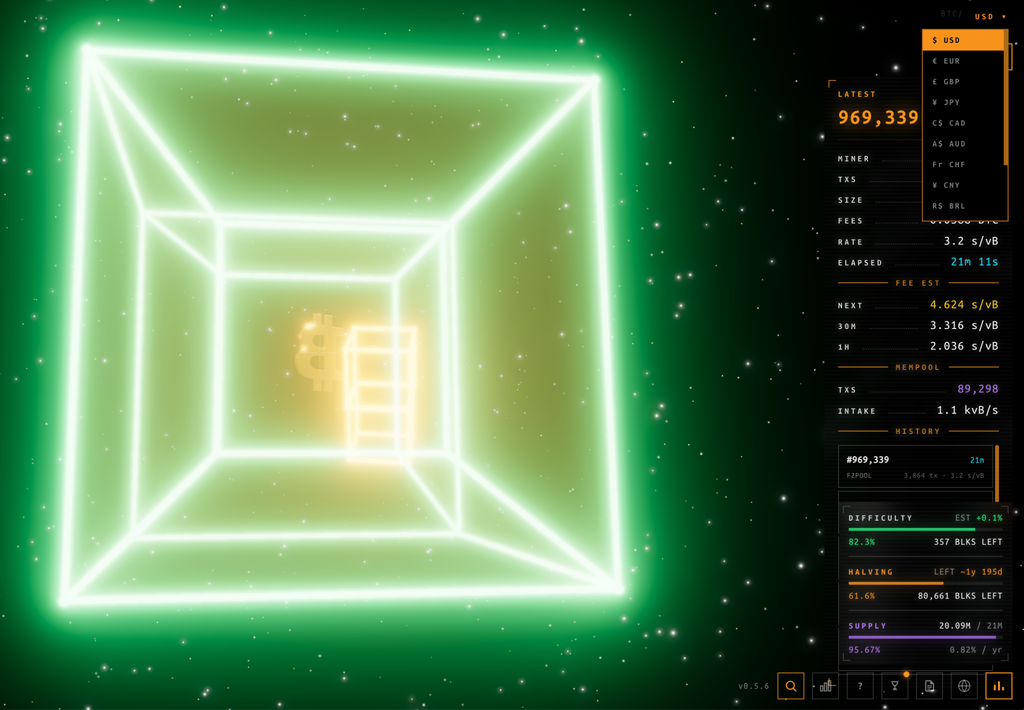
Tesseractb also allows users to explore the chain in 3D space using tesseract-inspired geometric figures. A small search icon in the bottom right corner lets visitors input transaction IDs and other data to locate specific addresses or blocks, making it a fully functional block explorer.
Symphony.iohk.io
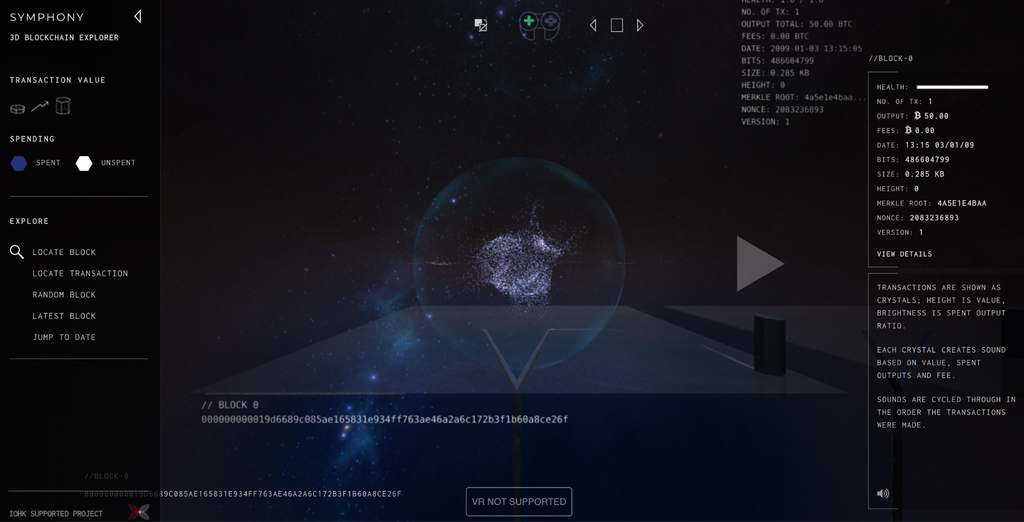
Developed as an IOHK.io project, Symphony is an engaging 3D explorer that gamifies block exploration. It accepts transaction IDs and block numbers to let users navigate the time chain. Its 3D environment is both visual and acoustic, incorporating a synthetic symphony that provides the sensation of an alien exploring the Milky Way. Users can navigate the 3D space using gaming-inspired controllers and keyboard keys, and the platform is even compatible with VR.
The Anatomy of Bitcoin
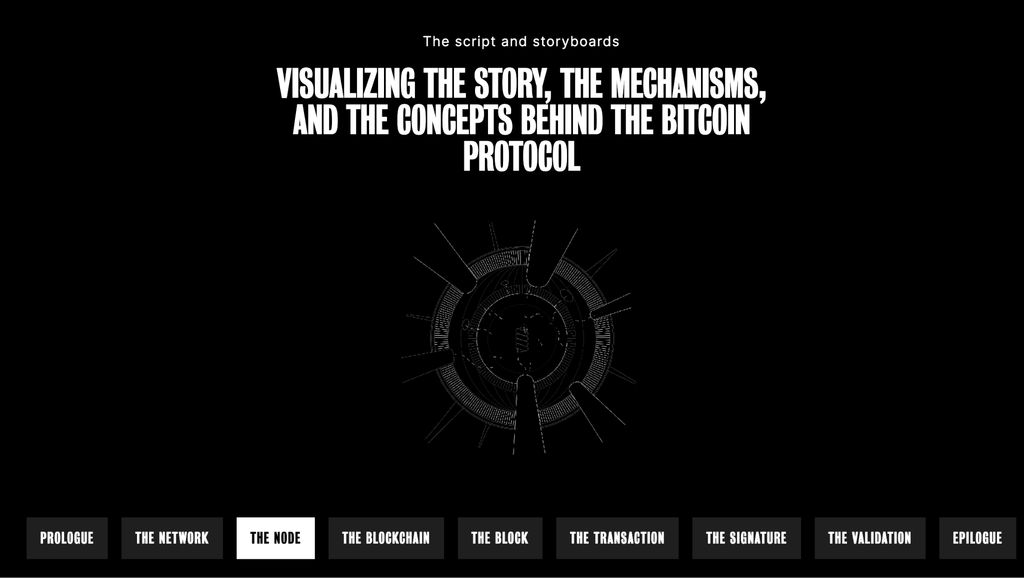
The Anatomy of Bitcoin website also merits recognition as a block explorer. Although primarily functioning as a data science project with a minimalist artistic aesthetic, the technology stack built by Pedro is live and synchronized with the network. The explorer accepts transaction IDs to return 3D and 2D transaction data, though the interface for doing so is somewhat concealed within the menus.
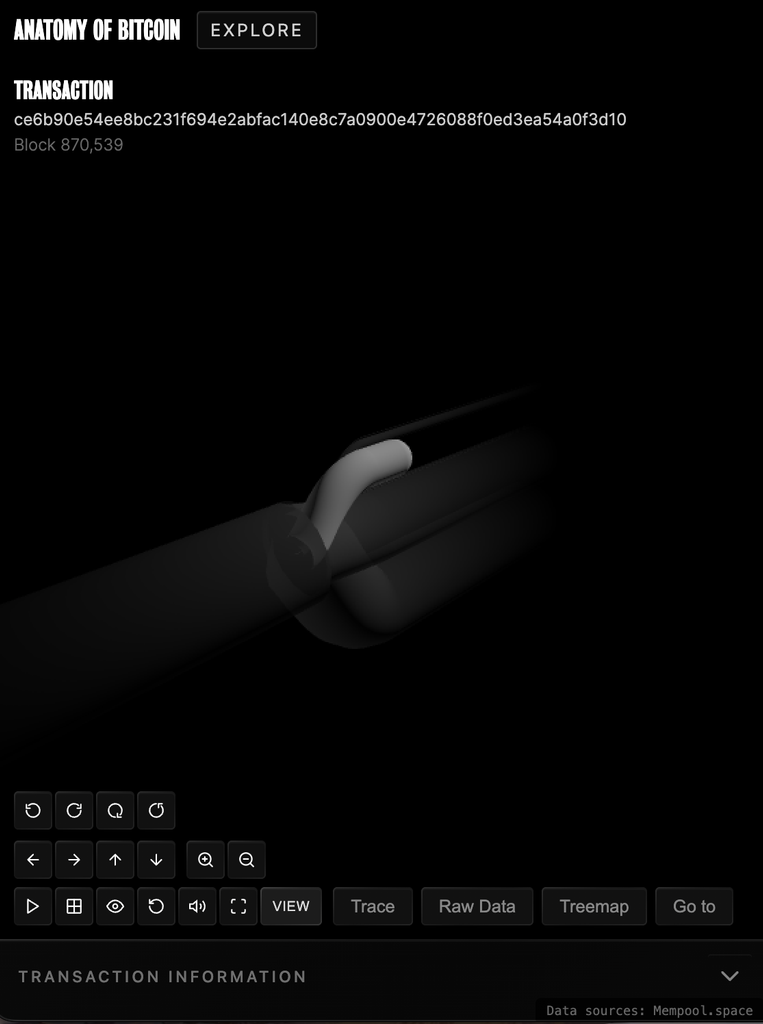
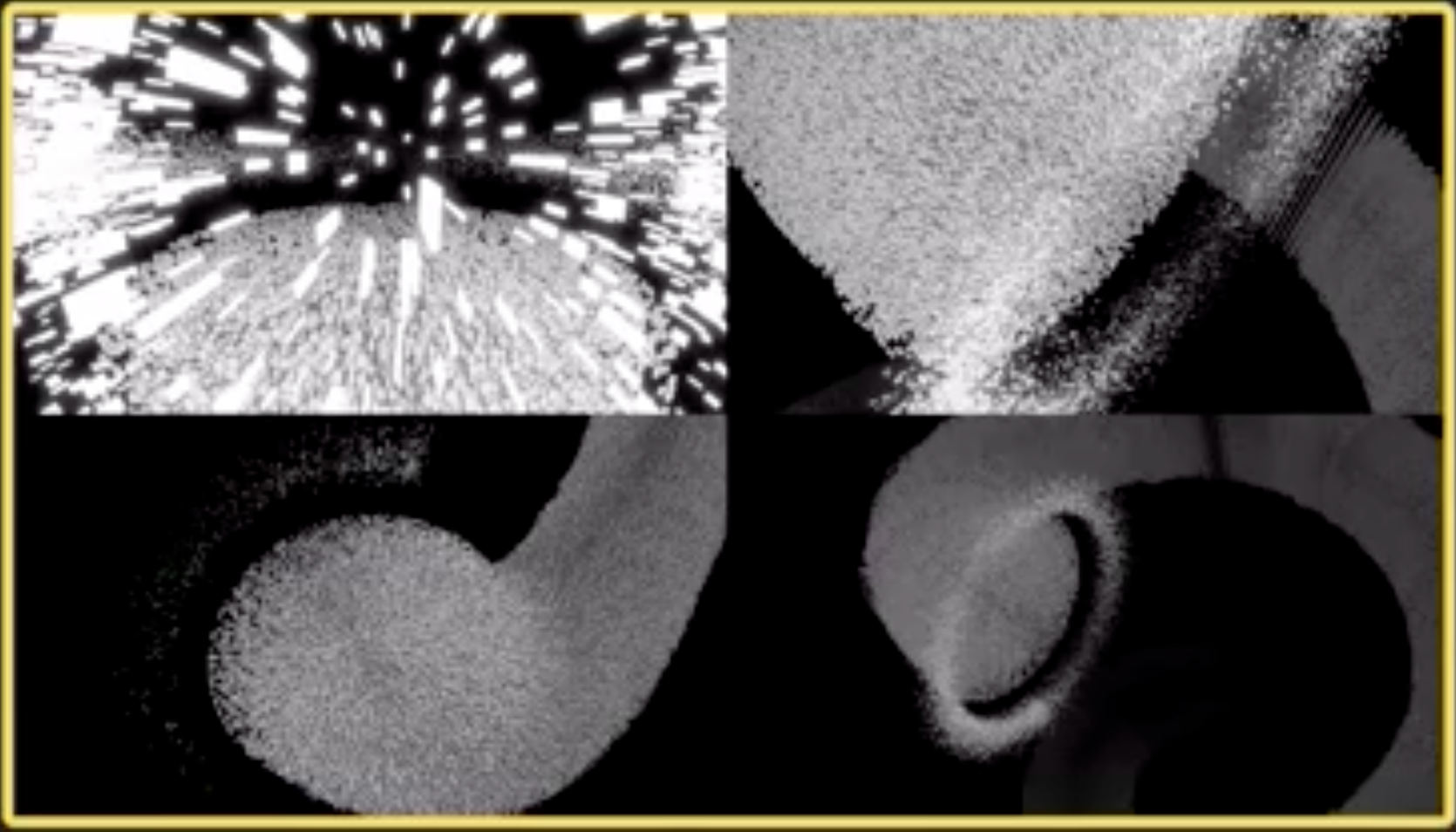
The true marvel of this project lies in its back end: an MIT-licensed, open-source 3D model of the Bitcoin system spanning nearly every level, from the cryptography of private keys in bits up to node network topology, blockchain data, and the dynamic state of the UTXO set. It represents an impressive stack of data science upon which other projects can easily construct interesting applications.
The site was originally launched with the vision of producing a film that would educate people about Bitcoin visually, supported by trailers and roadmap speeches. However, fundraising efforts fell short at the time, leaving the community without a film that, in hindsight, would likely be a staple of Bitcoin evangelism today. Hopefully, someone will eventually revive or fork the project to make it their own. The site still offers a wealth of content and inspiration, so be sure to check it out.
Mempool Visualizers
Certain mempool visualizers, however, do not function as block explorers and do not focus on specific transactions. Instead, they provide insight into transaction flow trends on-chain, approaching the data from either a data science or artistic perspective.
Mempool.JHoenicke.de
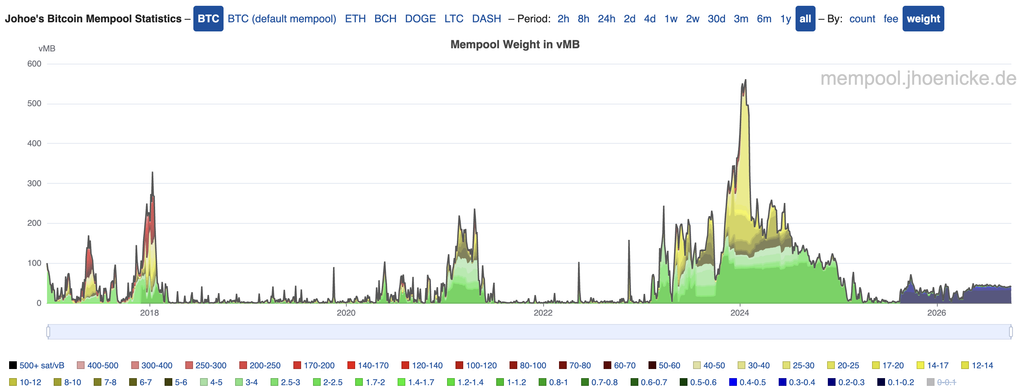
Perhaps the most iconic mempool visualizer is Dr. Jochen Hoenicke’s mempool data site. Online for at least a decade, it displays historical datasets of Bitcoin mempool activity dating back years, making it an invaluable resource for researchers and Bitcoin historians.
Hoenicke, a German computer scientist, became recognized in the Bitcoin community as a white-hat security researcher and a Trezor cryptographer, and he currently works for the smart contracting tech firm Certora. The scripts powering mempool.jhoenicke.de are open source under the AGPL3 license. The site is exceptionally useful for gauging the congestion levels of upcoming blocks and estimating appropriate on-chain fee rates.
demo.GetNotZero.com
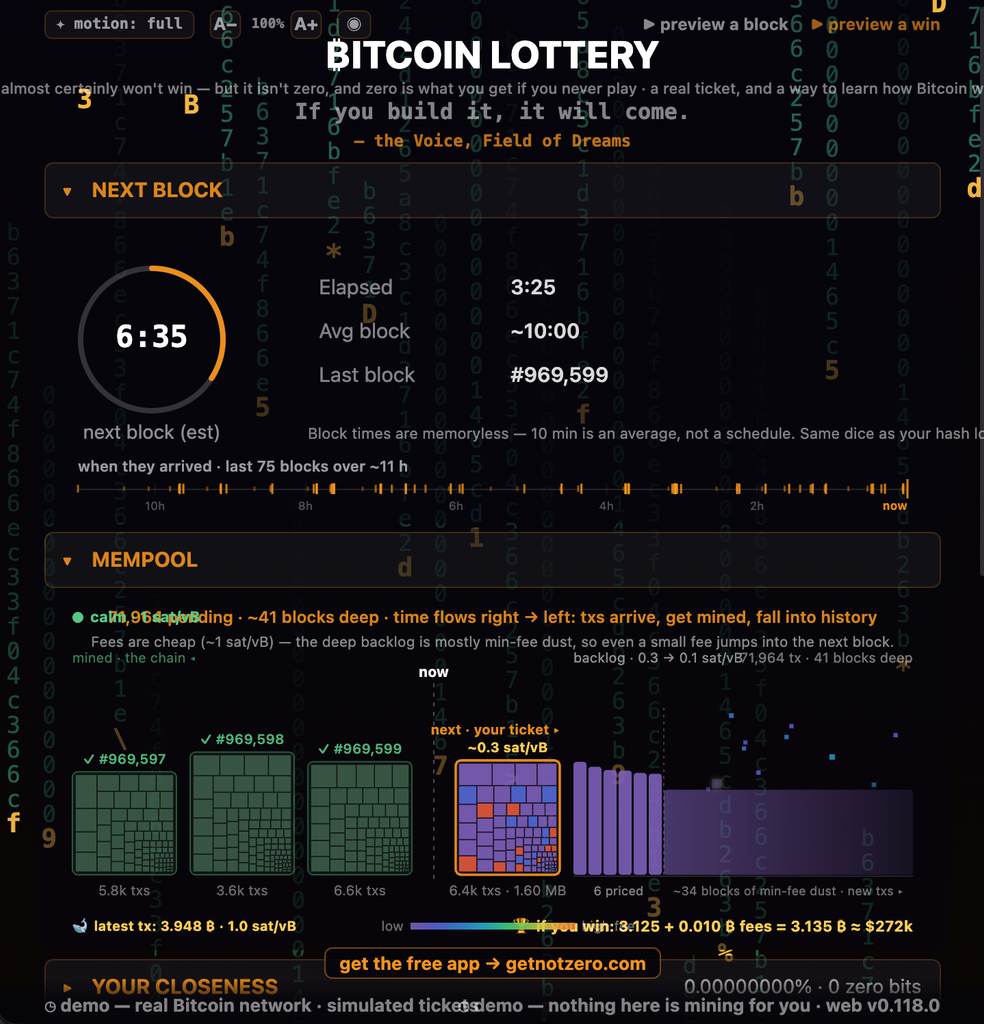
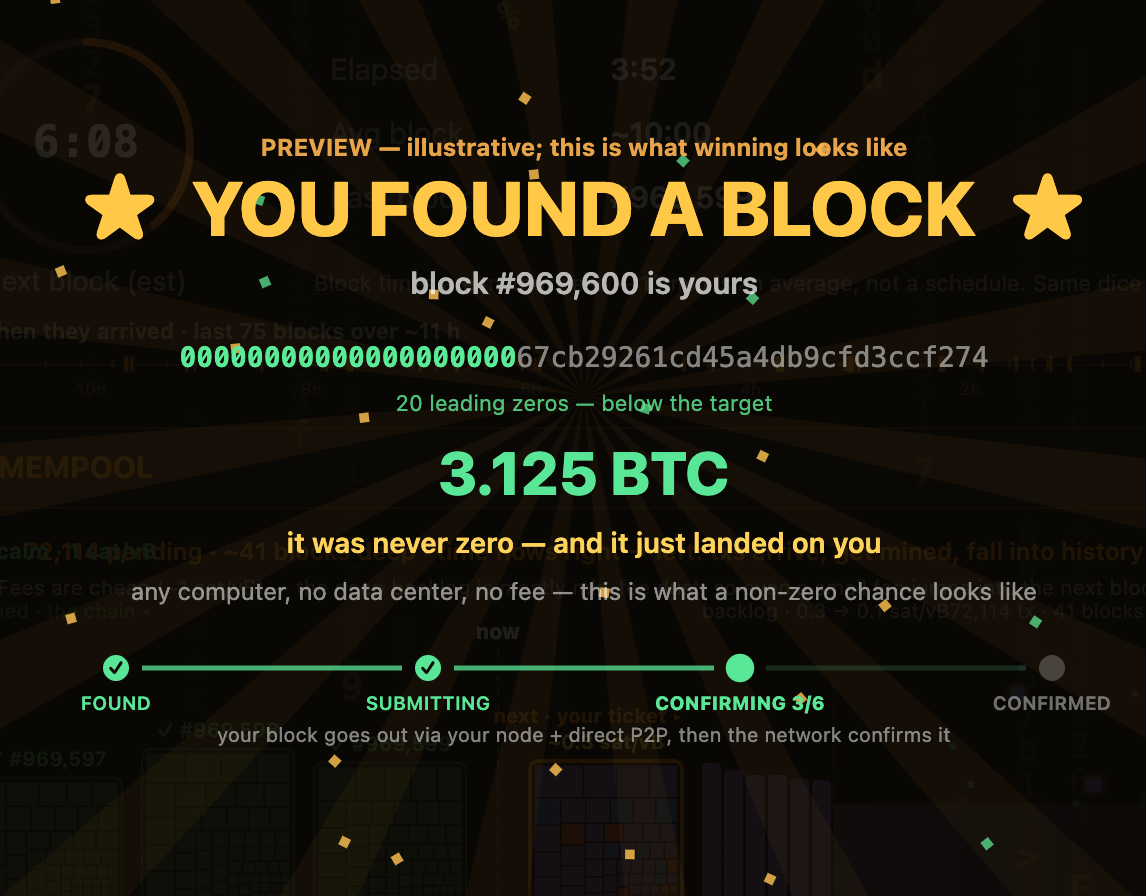
Blurring the boundaries between a real-time data dashboard and a hobbyist mining tool, GetNotZero presents a modern, orange, cypherpunk-themed perspective on a broad array of Bitcoin metrics. Its demo dashboard displays estimates for the next block’s hash rate, mempool block data anticipated for the upcoming block, mining difficulty, price, the time remaining until the next halving, and much more. At the core of the dashboard is an invitation to experiment with home mining using a personal computer. While mining bitcoin on a laptop historically made some individuals very wealthy, the odds today are significantly lower—though not quite zero.
That is precisely the site’s premise. Should you strike luck and mine an entire block, 3.125 BTC goes directly into your personal, self-hosted wallet without requiring any questions or KYC procedures. Treating it like a lottery reveals that the odds of solo mining a Bitcoin block might be better than expected. This beautifully designed project makes the process appear remarkably straightforward.
TxCity.io
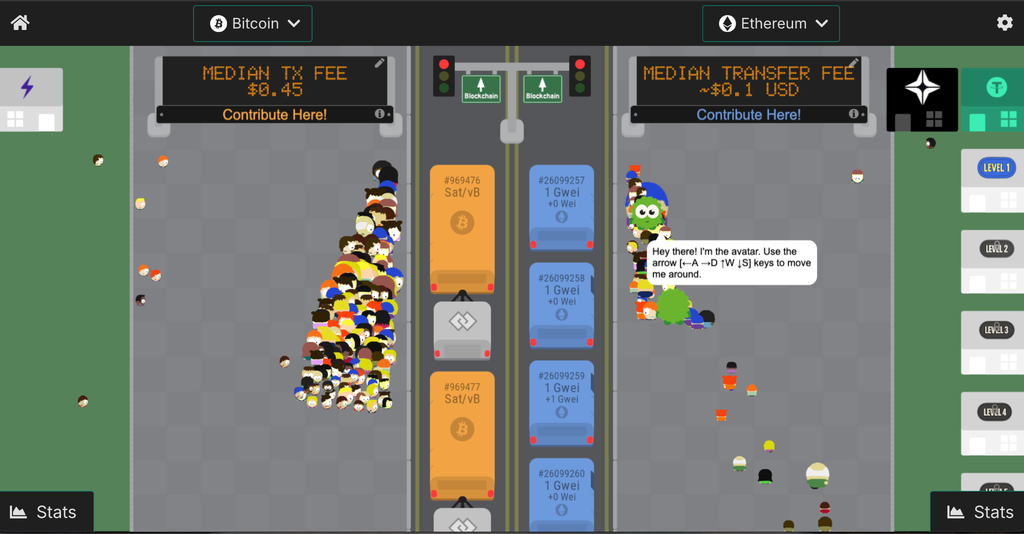
For a more playful take on mempool data, txcity.io pits the Bitcoin and Ethereum mempools against each other in a setting reminiscent of a South Park bus stop. Acknowledging SegWit transactions alongside Nakamoto-era block space, the site illustrates transactions piling up on both sides as South Park-style characters waiting for the next bus (representing a block). It also supports a wide array of legacy cryptocurrencies beyond Bitcoin and Ethereum for interested users.
Musical Mempools!
Moving beyond playful graphics, some artists interpret on-chain activity through a musical lens. Their interfaces assign tones and notes to the self-organizing chaos of the Bitcoin free market, generating subtle and pleasing musical flows—with a touch of artistic fine-tuning, of course.
Proof of Sound
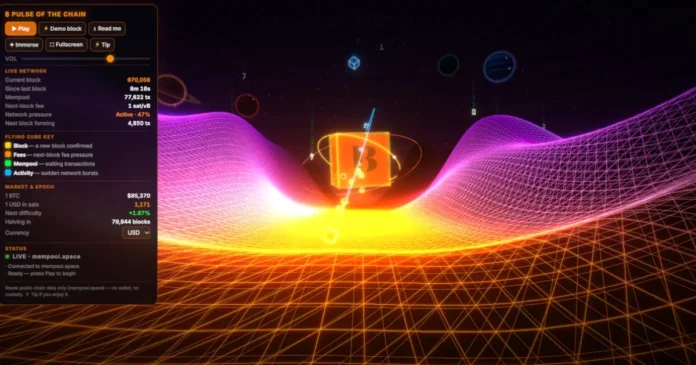
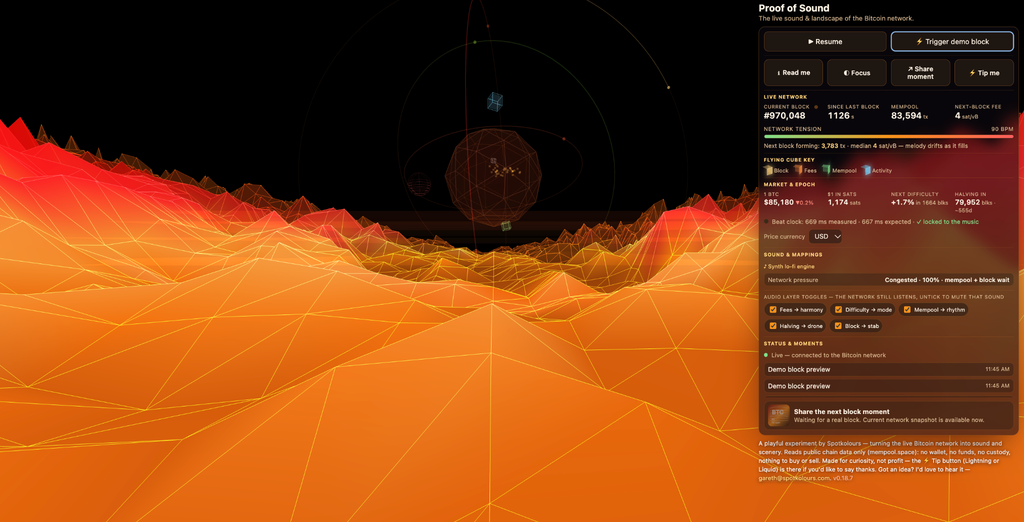
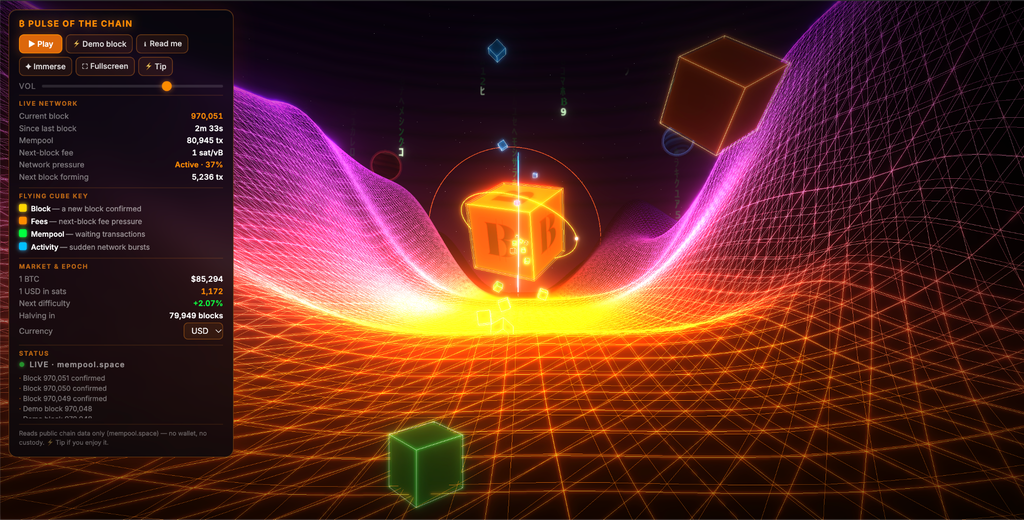
Perhaps the most polished musical mempool site is Proof of Sound, which assigns specific notes to various transaction types and mempool events, while discovered blocks feature their own dedicated notes. The synchronized 3D synthwave animation serves well as permanent screen decoration. Sound can be toggled on and off, though many find it pleasant to work with playing in the background. The platform includes customization options to let users fine-tune their background music and mempool experience.
Bitlisten
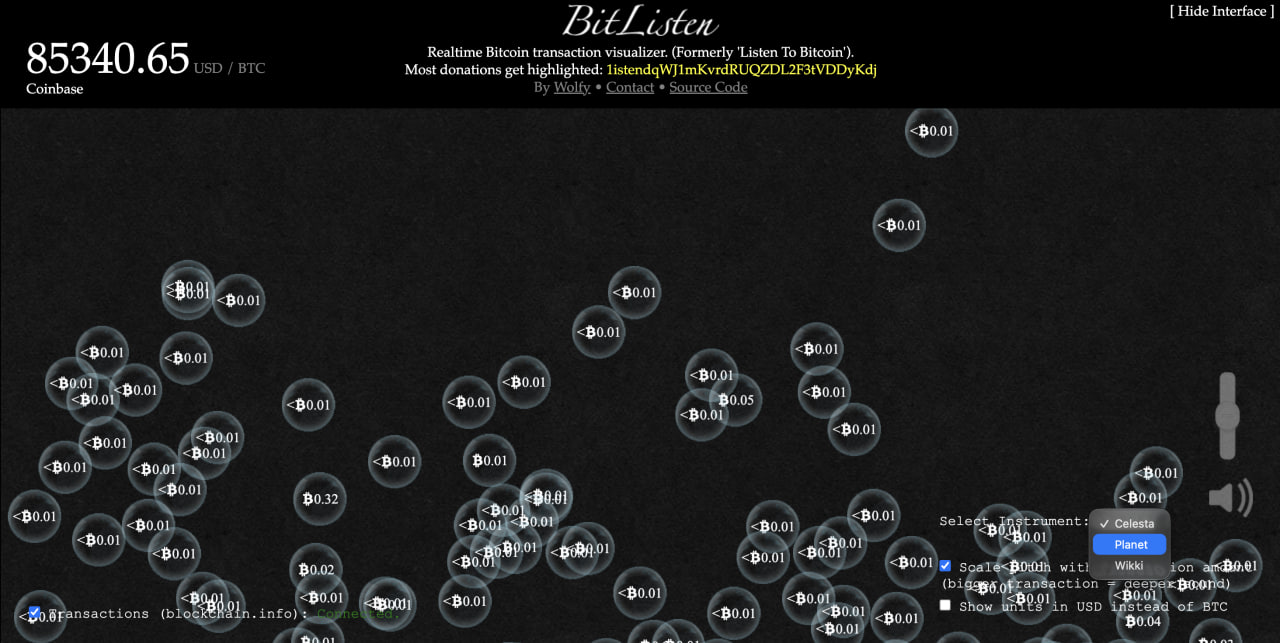
Adopting a more minimalist approach to the same concept, Bitlisten plays a bell sound for each transaction entering the mempool, scaled by its size. The result is a simple, soothing background soundscape. The default celesta instrument can be swapped for a few alternative options, completely transforming the musical output. While the visual presentation is somewhat basic—having been created prior to the era of vibe coding—the project is open source, allowing anyone so inclined to give it a visual update.
Phenomenal Gumption
Similar in design to Proof of Sound but offering a more controlled musical structure, this anonymous Netlify app delivers a solid background audio-visual tool for monitoring the mempool. On-chain activity is visually expressive, with the project’s README noting that every moment is unique as synth waves react to network events. Meanwhile, the accompanying music is professionally produced rather than being directly driven by the chaotic nature of the mempool.
OmPool
Rounding out the list is the OmPool interface for Omarchy OS, created by Pat Riley. This operating system has gained popularity among users looking to escape the walled gardens of Apple and Windows. Designed to function as a panel within the OS, the interface can run quietly in the background. The software is open source, and as demonstrated in the announcement tweet, the user interface features high-end design standards alongside delightful sound patterns generated from the mempool.
Turned the Bitcoin mempool into a live generative musical instrument
– Tempo follows transaction activity
– Pitch follows fee rate
– Value sets the reverb
– Blocks change the scaleBuilt on @OmarchyLinux @mempool + SuperCollider pic.twitter.com/doUwKyBTz5
— Pat Riley
(@_rileyio) September 5, 2026
What is a Bitcoin blockchain visualizer?
A Bitcoin visualizer is a tool or interface that displays on-chain data, transactions, or mempool activity through graphics, 3D environments, or audio.
Can I run a block explorer locally?
Yes, tools like Mempool.space feature open-source back ends that you can run locally on your own machine alongside a home full node.
What do musical mempool visualizers do?
They translate Bitcoin mempool activity, transaction sizes, and block discoveries into musical notes, melodies, and ambient soundscapes.