
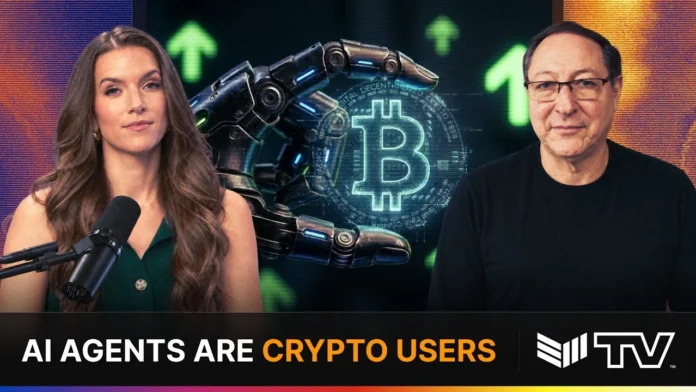

After 15 years of cryptocurrency infrastructure development—spanning stablecoins, tokenization, and lending—Jordi Visser contends that these financial rails were ultimately designed for non-human users. During a discussion with Grace Remington and Sean Hagan, Visser presents his “Ghost Rails” theory, drawing parallels between the present era and the 14-year period that separated Netscape’s public debut from the launch of the App Store. He argues that artificial intelligence agents, rather than retail crypto wallets, represent the true catalyst for an agentic economy—a shift he considers “extremely positive” for Bitcoin. For anyone seeking to understand what might shatter the prevailing liquidity-driven market narrative, this conversation offers a starting point.
Chapters:
00:00 — Betting on nominal growth: can AI outrun the U.S. debt load?
02:06 — Why Bitcoin is the only asset surviving 20 years
04:01 — Crypto built the plumbing, AI agents became the users
07:33 — Tokenization turns $900 trillion of illiquid assets into money
09:50 — What has to break before the top 10% finally buy Bitcoin
12:18 — The Santa Claus effect and why belief beats innovation
14:23 — Swarms working 24/7 and the exponential investors ignore
16:47 — Debt-financed data centers, cancer breakthroughs, and the bond market scare
19:19 — The AI doomsday soap opera
23:09 — Bitcoin demand for 30 years and the case for good deflation
The Ghost Rails thesis argues that the crypto rails built over the past 15 years—such as lending, stablecoins, and tokenization—were actually meant for AI agents rather than human users.
AI agents act as the users for the financial plumbing built by crypto over the past decade and a half, driving the new agentic economy.
Tokenization has the potential to convert $900 trillion of illiquid assets into functional money.